2026 · Workshop series
Room for Interaction
A program exploring body, space and interaction through seven independent sessions, presented with Glitch Lab.
View the programSchool of Tomorrow's AI · Wetzikon — Zürich, Switzerland
School of Tomorrow's AI is an artistic research platform. It turns strange questions about science, technology and possible futures into experiments, prototypes and public experiences. AI, like other scientific and technical systems, is treated as material — with grain, resistance and surprise.
The School works where artistic research meets science, technology and the body.
The work starts from questions that do not fit a product brief or a standard lab protocol. What happens if a room becomes an instrument, a garden listens, a gesture becomes a drawing.
Sensors, code, circuits, models and scientific methods are handled like any other material: tested, stressed, combined, allowed to fail. The point is not to master a tool. The point is to see what the material does.
Bodies, biosignals, machine perception, biological systems and spatial interaction are the field. Inquiry happens through movement, touch, voice, signal and presence — not only through screens.
The School treats the future as something that can be prototyped and encountered, not predicted. Small experiments allow a future condition to be tested before it becomes a scenario.
The School does not stop at describing a problem. A question is built, placed in a room, and watched.
A prototype is a way of thinking. It can be rough, unstable or incomplete, as long as it makes the question physical.
Research proceeds by assembling materials, running tests, breaking the setup and adjusting. Analysis develops alongside the object.
Some experiments stay in the atelier. Others are opened to a public, a partner or a live situation to see how the system behaves when other bodies enter it.
Workshops, labs and events are public formats through which the research sometimes meets other people.
A program exploring body, space and interaction through seven independent sessions, presented with Glitch Lab.
View the programA hybrid Arduino Day experiment using paper, simple electronics and live prototyping in Wetzikon.
Read about the lab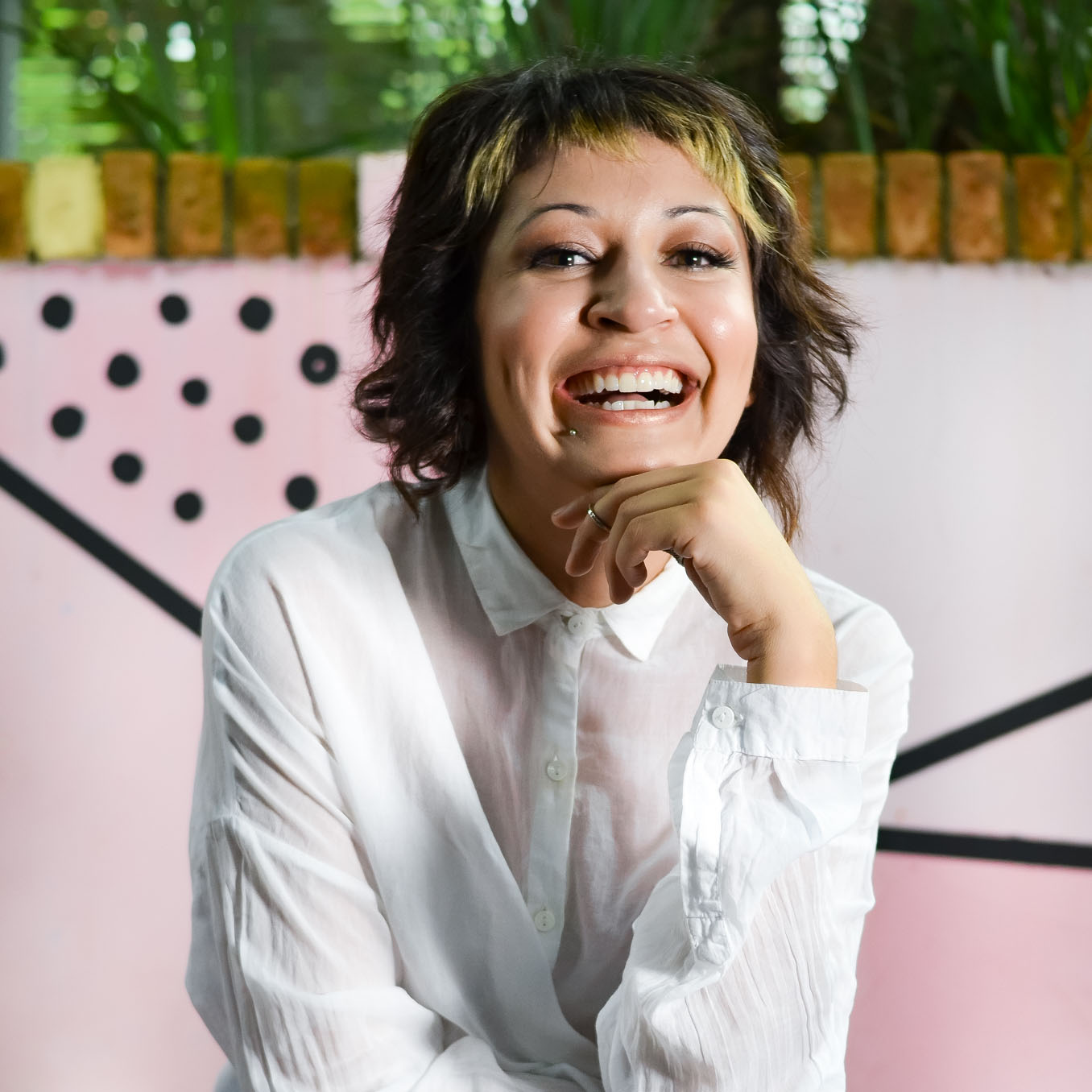
Lina Lopes is a Brazilian artist, educator and data scientist based in Zürich, Switzerland. Her practice moves between interactive installation, machine learning, biosignals and embodied systems, using science and technology as material for artistic research.
She founded School of Tomorrow's AI as a platform for speculative prototyping, experimentation and public research — a place where strange questions can become physical, testable and shared.
The School is based in an atelier at Schönau Areal in Wetzikon, in the Zürich region of Switzerland.
The atelier functions as the School's research and prototyping base: a place for building, testing, artistic research and public experiments. It includes spaces for hands-on fabrication, movement, experimentation and working with other people.
A former factory used for research, building and tests. Its industrial rooms are infrastructure, not a campus.
Studio, dirty workshop, dance floor and gathering rooms — the spatial tools of the work.
Experiments start here. Some stay in the atelier. Others leave as public encounters with other bodies in the room.
The School collaborates with cultural institutions, funders, research labs, foundations and organisations interested in unusual experimental research. Collaboration begins with a shared question.
Support an artistic investigation over time — a question that needs space, materials and the possibility to change as the prototype changes.
Commission a prototype, artwork or experimental research process around a question relevant to your context.
Bring a scientific, technological, cultural or institutional setting into a shared investigation. The School enters as an artistic research partner.
For funding, commissions and research collaborations.
Start a conversation →︎ lilothink.science@gmail.comPublic dates appear here when there is something to attend. The research continues between them.
Updates
Occasional notes from the School — new investigations, public experiments and dates worth showing up for.